
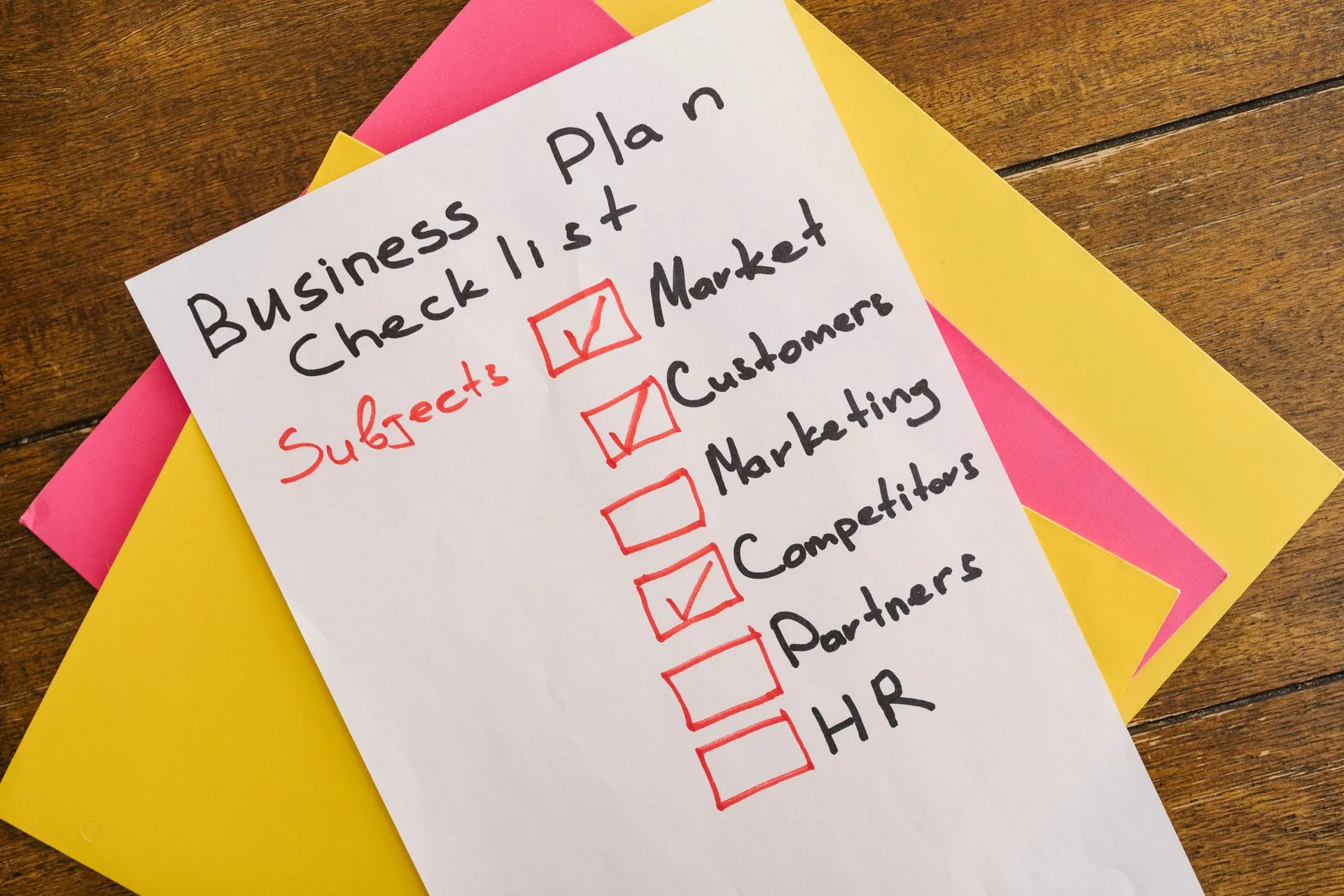
Opening a store is exciting, and that is exactly when small things get missed. A policy page that is still a placeholder, a checkout that fails on one payment method, a product with the wrong price. Customers who run into these do not complain, they leave. An hour spent on this list is cheap protection.
Products
- Every product has a clear title, original description and several photos.
- Prices are correct and your margin works (see pricing and margins).
- Variants, sizes and colors are set up and match what the supplier offers.
- You have ordered samples of your main products.
- Stock status and delivery times are accurate.
Checkout and payments
- Payment methods are connected and you have made a real test payment.
- Taxes and shipping rates are set for the countries you serve.
- The order confirmation email arrives and looks right.
- Discount codes work, and expired ones do not.
Legal and policy pages
- Shipping policy with realistic delivery times.
- Return and refund policy.
- Privacy policy and terms of service, with cookie consent where needed.
- Business name and contact details visible.
Rules vary by country, so check what applies where you and your customers are. Do not copy another store's legal text without reading it.
Experience
- The store looks right on a phone, a tablet and a computer.
- Pages load quickly. Compress large images.
- Navigation is simple, with clear categories and a working search.
- A contact form or email that you actually check.
Tracking and search
- Analytics installed and recording visits and purchases.
- Ad pixels installed, if you plan to advertise, and tested.
- Page titles and descriptions written for the main pages, and a sitemap submitted to search engines.
The final test
Do a complete purchase as a customer would, from a product page to the confirmation email, on your phone. Then check the order shows up correctly on your side and with the supplier. If something feels clumsy to you, it will feel worse to a stranger.
After you launch
Look at the store every day for the first week. Read the first orders, answer messages quickly and fix issues straight away. Then work on the pages that matter most: your product pages and your choice of where to find customers (own store, marketplace or both).
A launch is not a finish line. It is the point from which you start learning from real customers, and a clean start makes that learning faster.
Product research, store research, ads spy and video dropshipping in one place.